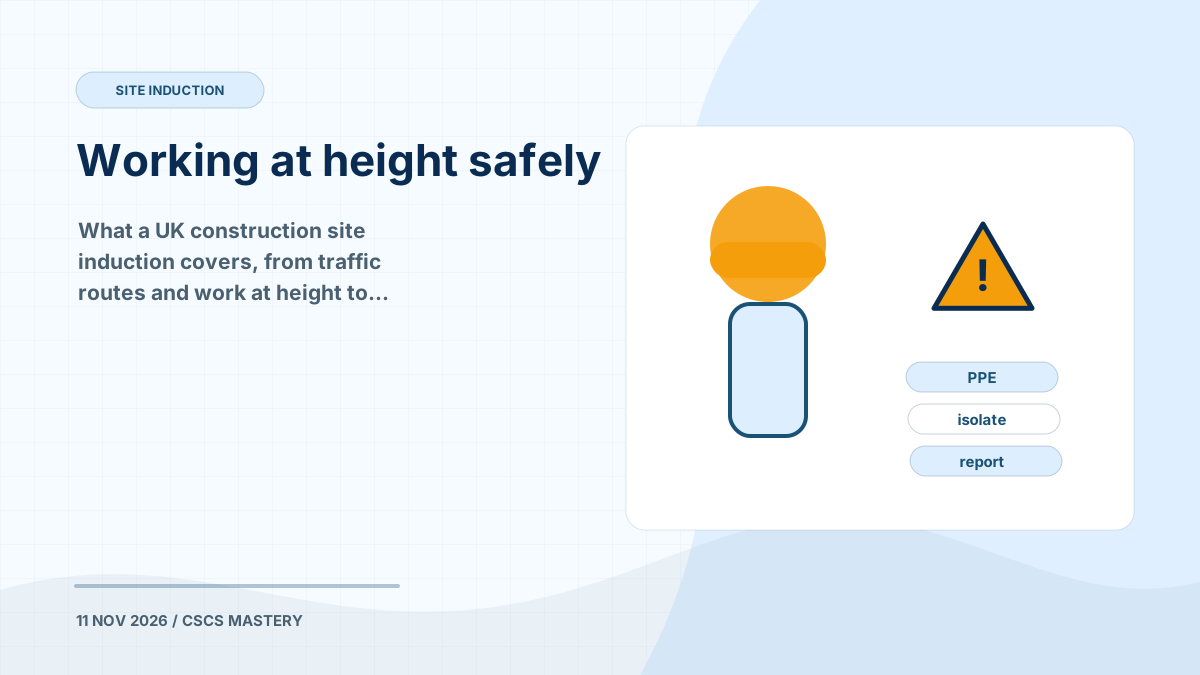
Your first morning on a new construction site usually starts in the site office, not on the tools. Before you set foot in the work area, you will sit through a site induction. Some people treat it as a box-ticking exercise. That is a mistake. The induction is your one chance to learn how this site works: where the dangers are, which routes are safe, and who to go to when something looks wrong.
This guide follows a typical construction induction from start to finish. It explains what each part means for you and how it links to the topics in the CITB Health, Safety and Environment (HS&E) test.
Why Every Site Induction Matters
Under the Construction (Design and Management) Regulations 2015, the principal contractor must give every worker a suitable site induction. This is a legal duty, not a courtesy. It sits alongside the wider duties in the Health and Safety at Work etc. Act 1974 (HASAWA), which requires employers to protect workers and requires workers to take reasonable care of themselves and others. If you want more background on how these duties fit together, our guide to CDM 2015 regulations explained covers the full picture.
The induction in the video starts with that shared responsibility:
“We all have a role to play in looking after both ourselves and other site users whilst in the workplace environment.”
Every site is different. The ground conditions, plant, layout and phase of work all change the risks. That is why you need a fresh induction on every new site, however many CSCS cards or years of experience you have.
Arriving on Site: Vehicles, Parking and Pedestrian Routes
The first practical points in most inductions cover how you get onto the site and move around it safely. The video makes several points that are common across UK sites:
- Reverse park where possible. This reduces the risk of collisions with other vehicles, plant and pedestrians when you leave.
- Expect heavy traffic. Cars, vans, mobile plant and heavy goods vehicles operate regularly around the work area.
- Communicate with drivers and banksmen. Never assume a driver has seen you.
- Wear high-visibility clothing in all designated areas.
- Use pedestrian walkways and look out for safety signage.
Struck-by incidents involving vehicles and plant are a major cause of serious injury in construction. Keeping people and vehicles apart is one of the most important controls on any site.
The Key Site Risks Your Induction Will Cover
After site access, the induction moves on to the main hazards you are likely to meet. Here is what each one means in practice.
Housekeeping, Slips and Trips
Trailing cables, stored materials, uneven ground and changes in level all cause trips. The video’s advice is simple and worth remembering:
“Keep your own work area tidy. And if you see a risk, sort it or report it to someone who can.”
Stick to designated walkways and wear proper safety footwear at all times.
Manual Handling
Manual handling means using your body to move loads or operate machinery. Under the Manual Handling Operations Regulations 1992, manual handling should be avoided where reasonably practicable. Where it cannot be avoided, the risk should be assessed and reduced. In practice, that means using mechanical aids and lifting equipment wherever possible.
Work at Height
The video does not soften this point:
“Working at height is the biggest single cause of serious and fatal injury in the construction industry.”
Work at height covers roof work, mobile elevating work platforms (MEWPs), scaffolds, ladders and rope access. Before work starts, controls must be in place to prevent falls or reduce how far someone could fall and how badly they could be hurt.
Structures and Excavations
Altering or dismantling structures, and digging into the ground, can cause an unexpected collapse. Exclusion zones and temporary supports keep people out of danger while the work goes on. Never enter an excavation or go near a structure under alteration unless you have been told it is safe.
Lifting Operations
Every lift must be properly planned, appropriately supervised and carried out safely. Cranes and accessories such as slings must be strong enough for the load, tested, and regularly examined and inspected. Crane operators, slingers and anyone directing a lift must be trained and competent.
Electrical Safety
Work on live systems should only happen in exceptional circumstances, and only by a qualified, authorised person. Whether the risk comes from building services, overhead power lines or buried cables, a safe system of work must be in place to identify and control it.
Mobile Plant and Vehicles
Excavators, telehandlers, MEWPs and other heavy plant are part of daily life on most sites. Operators must be qualified and competent for the specific plant they use. Everyone, whether they operate plant or walk past it, must follow the site’s traffic management plan.
Permits to Work
Some high-risk activities need a formal permit before work can begin. The video gives these examples:
- Working at height
- Hot works
- Excavations
- Working in confined spaces
A permit sets out exactly what work is allowed, the precautions needed, and who is responsible. It usually sits alongside the task’s risk assessment and method statement. If you have not worked with these documents before, our guide to RAMS, risk assessments and method statements explains how they connect. If you are not sure whether your task needs a permit, ask your site manager before you start. Do not assume.
Reporting Hazards and Concerns
The induction ends with what may be its most important message. If you spot a safety or environmental hazard, or you are unsure about anything that affects your safety or someone else’s, report it straight away. Tell your line manager, your host or the site health and safety representative.
Reporting is not complaining. It is how near misses get fixed before they become injuries. Some events must also be reported formally under RIDDOR, so a reporting culture that starts with workers on the ground matters at every level.
How the Induction Links to Your CSCS Card
Most principal contractors will check your CSCS card at induction. The card shows that you have passed the CITB HS&E test and hold the right qualifications for your role. That might be a green Labourer card, a red Trained Operative card, a blue Skilled Worker card, a gold Supervisor card or a black Manager card. If you are unsure which one fits your job, see our guide to CSCS card types explained.
Many HS&E test questions cover the same ground as a site induction: traffic management, work at height, manual handling, lifting operations, electrical safety, permits and hazard reporting. If you understand why each induction rule exists, you are already well on your way to passing the test.
How CSCS Mastery Fits Into This
Site inductions, permits to work and site risk control are central to running a safe site. If you are moving into supervision or management, they become part of your daily responsibilities. The SiteSafetyPlus app, available on our site safety page, is built for this stage of your career. It includes over 900 SSSTS and SMSTS practice questions with detailed explanations for every answer, plus full mock tests that copy the real exam format.
SiteSafetyPlus also includes practical tools for day-to-day site work: an F10 notification helper, a risk matrix, a permit-to-work tool and a RIDDOR reporting guide. Whether you are preparing for your first supervisory course or want a reliable reference on site, it helps you turn induction-level knowledge into confident, competent site leadership.
Revise on the go with CSCS Mastery
2,000+ practice questions, study guides, and detailed explanations — all in your pocket.

